
Supporting children and youth · Practical guide
Why Choose Creative Arts Therapies as Support for Your Child
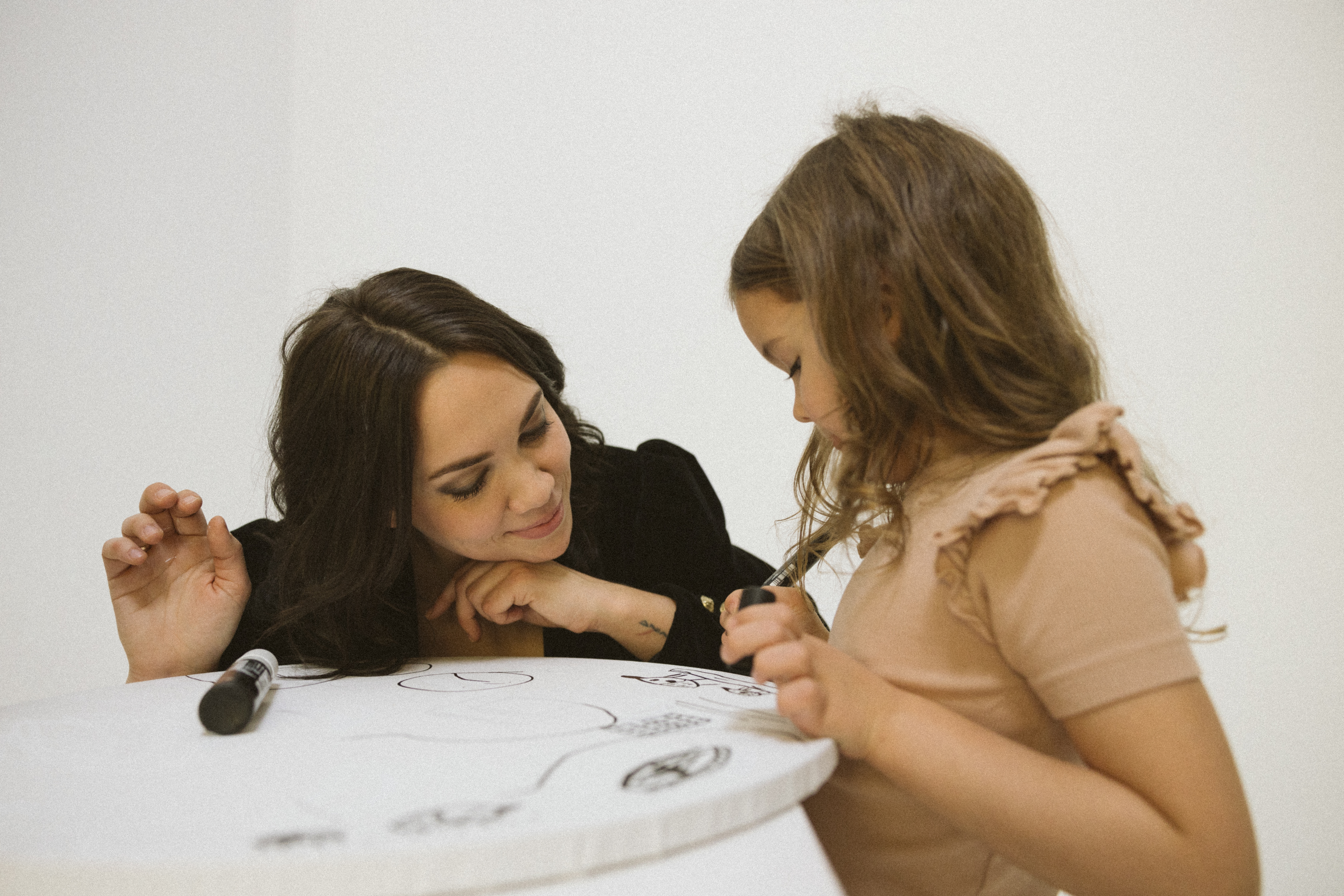
For many children, especially at a young age, putting what is happening into words can be difficult as their ability to describe feelings and experiences is still developing. However, finding the right words can be challenging at any age—especially when an experience is new, intense, or conflicting. Sometimes a child is not ready to talk or simply does not wish to. Other times, all available words have already been used, yet the feeling and its associated reactions remain acute.
Children and young people often possess a remarkable amount of creativity, playfulness, and capacity to find new solutions. They may not always be able to explain their experience at length, but they can show very quickly what they need if given the right tools and enough freedom to explore. In my work, I have often noticed that children find a new way forward through creative activity faster than adults because they are not yet so bound to the idea that there can only be one "right" answer to a problem. Their ability to play, imagine, change direction mid-activity, and try again is a vital internal resource that helps them adapt even to difficult life experiences.
A child does not need to know how to play an instrument, draw, or craft to come to therapy. These activities are not an end in themselves, but rather tools for building connection, understanding the child's experience, and supporting their strengths and inner resources.
With some young people, instead of talking about music therapy at first, we might simply talk about "forming a band". For another child, the safest start may be quiet drawing, exploring materials, or simply being in the room and observing the therapist.
I have often said that no two fingerprints are identical. Likewise, there can be no single approach that fits all children, their development, health, and creativity in the same way. Therapy goals are shaped in collaboration between the child, family, and therapist. The process can support, for example, emotional expression and regulation, self-confidence, focus, communication, adapting to changes, or coping with daily life. Creative arts therapy can also be sought when a child does not have a formal diagnosis, but the difficulties they face affect their well-being, learning, relationships, or daily family life.
Parents often share that they have already tried various approaches, but the hoped-for changes are not yet visible. It is completely understandable to ask how creative arts therapy works and when its impact might become noticeable. It is important to know that the start of positive change is not a perfectly played song or a beautifully finished picture. First and foremost, a child needs a trusting and safe relationship. For some children, the therapy room quickly becomes a place where they experience being heard and understood. This in itself is an important change. For another child, the therapy room provides an environment where they can safely experiment, make mistakes, feel joy, or channel their tension into music, movement, or art. This, too, is an impact, even if it is not immediately visible outside the therapy room.
For some children, building trust and connection takes more time. If a child's prior experiences include few safe, consistent, and supportive relationships with adults, they may not yet know what such a relationship can be like. They may need time to experience that this adult is present, keeps agreements, tolerates their feelings, and does not disappear even when things are difficult.
Building such an experience cannot be rushed. For some children, trust develops over months; for others, it may take years. This time is not wasted, nor does it mean that nothing is happening in therapy. Experiencing a safe and supportive relationship and gradually learning to trust it can be one of the most vital parts of the therapeutic process.
It is precisely in these situations that the arts can offer a child an additional channel of communication. The rhythm, tempo, dynamics, and silence in music, or the colours, shapes, and materials in art, can help build connection even when direct conversation or face-to-face interaction feels too daunting for the child. Artistic activity can become a bridge between child and therapist—something to share first before it becomes possible to talk together.
Change rarely happens overnight. Creative arts therapy is a consistent, goal-directed process guided by a professionally trained therapist. At its center is always the individual child or youth—their needs, pace, strengths, and way of relating to the world.
Depending on their training, clinical orientation, and practical experience, creative arts therapists work with children and young people with a wide range of needs and characteristics. Therefore, at the very first meeting, parents are encouraged to ask about the therapist's prior experience, how goals are established, how progress is observed, and how parents can support the process.
Creative arts therapies provide children and young people with a safe, age-appropriate way to express their feelings, thoughts, and experiences. Through music, art, movement, and creative play, it is possible to support self-expression, emotional regulation, self-confidence, communication skills, and everyday coping.